Social Media Stuff EmbedTree is a phrase that can be confusing because it combines social media content with the idea of organizing or embedding digital content in one place. For U.S. creators, businesses, bloggers, and marketers, understanding the concept starts with separating verified information from assumptions.
Embedtree.com has a dedicated Social Media Stuff category covering social platforms, creators, marketing, content, and related digital topics. Its published social-media guide also discusses bringing social links and content together through a central, shareable page.
What Is Social Media Stuff EmbedTree?
At its core, the phrase refers to social-media-related content associated with EmbedTree and the broader concept of organizing social destinations or content through a central online experience. The official Embedtree website presents Social Media Stuff as an editorial category. The category covers subjects connected with social media, digital marketing, creators, platforms, and online content.
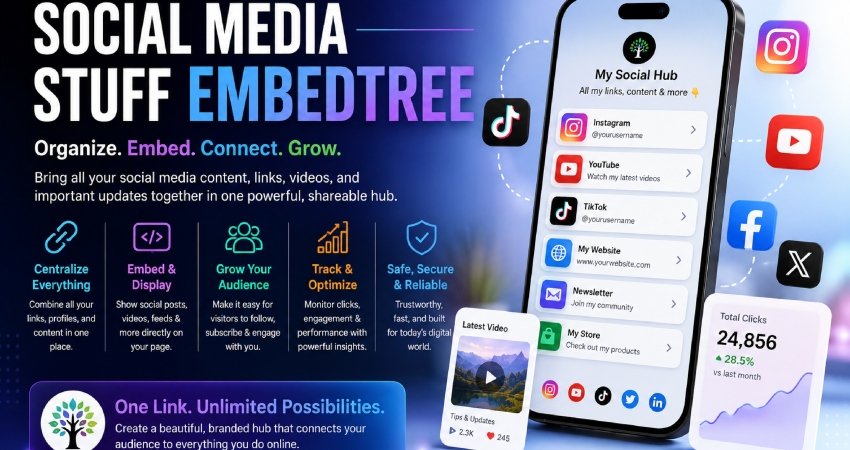
Embedtree also discusses the concept of bringing social links and content together so visitors can access multiple destinations from one central page.
How the Social Content Hub Concept Works
A social content hub solves a common problem: audiences are spread across multiple platforms. A creator might publish videos on YouTube, short-form content on TikTok, photographs on Instagram, and articles on a personal website. A business may have social profiles, product pages, reviews, and customer resources spread across several destinations. A central page provides one starting point. The visitor opens one URL and can then choose the destination that matches their interest.
Centralized Social Links
The first function is organization. Important social profiles and digital destinations can be presented together instead of forcing visitors to search for them individually.
Embedded or Connected Content
Depending on the technology being used, a website may display social posts, videos, images, or other media directly within a page. This can create a smoother experience than sending visitors away immediately.
Clear Calls to Action
A well-designed hub gives visitors an obvious next step. A creator may prioritize a new video, while a business may prioritize a product, appointment, or contact page.
Why Social Content Organization Matters
Social media has become fragmented. People rarely consume all of a brand’s content on one platform. That creates a discovery problem. A follower may know a creator on Instagram but not realize that the same creator publishes longer tutorials on YouTube. A customer may find a company through TikTok but never discover its website. A central content destination can connect those experiences.
For U.S. businesses, this can be particularly useful when social media supports a larger marketing funnel. Social content attracts attention, the central page organizes options, and the website or landing page handles deeper information or conversion.
Social Media Stuff EmbedTree for Creators
Creators can use a central social-content strategy to make their online presence easier to navigate. Imagine a creator who publishes technology reviews. Their central page could connect their newest YouTube review, Instagram profile, TikTok videos, website, newsletter, and recommended resources.
A creator should not place every possible destination at the top. The page should highlight the content that currently matters most. This makes the experience faster and more useful for followers.
Social Media Stuff EmbedTree for Businesses
Businesses can approach the concept from a customer-experience perspective. A central page might connect social profiles with important business resources, such as a website, product information, customer-support page, booking destination, or current campaign.
For small U.S. businesses, this can create a simple bridge between social discovery and owned digital properties. The goal is not to replace the company’s website. It is to make the journey between channels easier.
Social Media Content vs. Simple Social Links
| Approach | Main Purpose | Best Use |
|---|---|---|
| Social icons | Direct visitors to profiles | Basic website navigation |
| Link-in-bio page | Combine several destinations | Creators and influencers |
| Embedded social content | Display selected media on a webpage | Content-rich websites |
| Central content hub | Organize links, media, and actions | Brands, creators, and campaigns |
Best Practices for Individual Users
Individual creators should keep their central page focused. Choose the most important destinations first and remove abandoned or outdated profiles. Use descriptive link names. Make the page easy to scan on a phone. Test every destination before sharing the URL.
Creators should also review their page regularly. Social campaigns change, new videos replace old ones, and priorities shift. An outdated hub can make an otherwise active creator look neglected. Most importantly, avoid publishing personal information that does not need to be public. Social convenience should never come at the expense of privacy.
Best Practices for Technical Teams
- Technical teams should treat social integrations as third-party dependencies.
- Before deployment, test embedded content across modern browsers and mobile devices. Monitor page performance because external scripts, videos, and widgets can increase loading costs.
- Teams should also review privacy implications. Third-party embeds may introduce cookies, tracking technologies, or external requests. Depending on the site’s audience and jurisdiction, consent and disclosure requirements may apply.
- Accessibility deserves equal attention. Embedded content should not make keyboard navigation difficult or hide important information from assistive technologies.
- Finally, establish a maintenance process. If a social platform changes its embedding system, an integration can stop working without warning.
Pros and Cons
Pros
- Creates one convenient destination for multiple social resources.
- Makes scattered content easier for visitors to discover.
- Can strengthen the connection between social channels and a website.
- Gives creators and businesses a more organized digital presence.
- Can support campaigns by placing important destinations together.
Cons
- Too many links can create unnecessary clutter.
- External embeds can affect page performance.
- Platform changes can break third-party integrations.
- Some social content may introduce privacy or tracking concerns.
- A social hub alone does not guarantee better search rankings.
Common Mistakes to Avoid
The biggest mistake is treating every claim about the platform as verified. Competitor pages sometimes describe features without clearly establishing whether those capabilities belong to the official service. Another mistake is adding too much content. A page packed with feeds, videos, buttons, and links can overwhelm visitors.
Performance is another concern. A visually impressive page is not successful if it loads slowly on a mobile connection. Finally, do not allow social content to replace original website content. Your website should still provide useful information that visitors cannot get simply by browsing your social profiles.
Frequently Asked Questions
What does Social Media Stuff EmbedTree mean?
It refers to social-media-related content associated with EmbedTree and the concept of organizing social links or content through a central digital destination.
Is EmbedTree a social media platform?
Not in the conventional sense. Embedtree.com presents Social Media Stuff as an editorial category covering social-media-related subjects rather than as a traditional social network.
Can a social content hub help SEO?
It can support the broader user experience and content strategy, but simply embedding social media does not guarantee improved rankings.
Who can benefit from a central social-content page?
Creators, influencers, small businesses, marketers, bloggers, and organizations managing several digital destinations can find this approach useful.
Are social embeds safe to use?
They can be useful, but users and technical teams should review privacy, security, accessibility, and performance implications before adding third-party integrations.
Final Thoughts
Social Media Stuff EmbedTree makes the most sense when viewed through two connected ideas: social-media content and centralized digital organization. For creators and businesses, a central hub can make scattered profiles, content, and important destinations easier to discover. But successful implementation requires more than adding links. The page should be focused, mobile-friendly, fast, accessible, and regularly maintained.
For technical teams, third-party embeds deserve additional scrutiny because they can affect performance, privacy, and reliability. For individual users, the priority should be simple navigation and careful protection of personal information.
A useful social hub should make your digital presence clearer—not create another layer of confusion or risk.