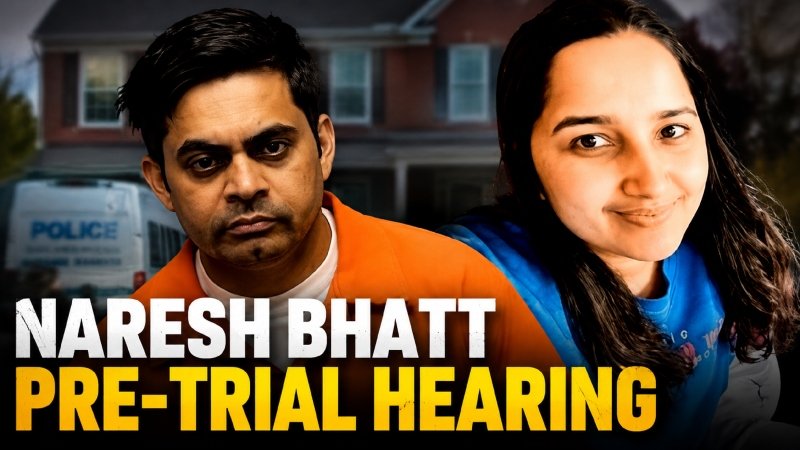
The disappearance of Mamta Kafle Bhatt shocked a community in Northern Virginia and attracted widespread attention across the United States and Nepal. What initially appeared to be a missing-person investigation eventually developed into a major criminal case involving forensic evidence, surveillance footage, conflicting statements, and disturbing courtroom testimony.
More than two years after Mamta disappeared, a jury reached its verdict in one of Virginia’s closely followed murder trials. On November 10, 2026, her husband, Naresh Bhatt, was found guilty of first-degree murder and two additional offenses involving her body.
The verdict came after nearly six weeks of testimony and evidence. One of the most unusual aspects of the case was that investigators had never recovered Mamta’s remains. Nevertheless, prosecutors presented evidence they argued established that she had been killed and that her husband had concealed what happened.
Here is a detailed look at Mamta’s life, her disappearance, the investigation, the evidence presented in court, Naresh Bhatt’s testimony, and the jury’s final decision.
Who Was Mamta Kafle Bhatt?
Mamta Kafle Bhatt was a 28-year-old registered nurse originally from Nepal who lived in Manassas Park, Virginia. She had moved to the United States and was building a life with her husband, Naresh Bhatt.
Mamta worked as a nurse at UVA Health Prince William Medical Center. Colleagues knew her through her professional life, while friends and family described her as someone whose sudden absence raised immediate concerns.
She was also the mother of a young daughter. Her disappearance therefore created serious concerns among the people closest to her, particularly because she had stopped communicating as she normally did.
Her family and friends wanted answers when they could no longer reach her. What followed was an investigation that eventually became a first-degree murder prosecution.
Who Is Naresh Bhatt?
Naresh Bhatt is Mamta’s husband and the defendant in the criminal case involving her disappearance and presumed death. Before his arrest, he lived with Mamta and their young daughter in Manassas Park, Virginia. After Mamta disappeared in July 2024, his statements and actions became important parts of the investigation.
Police began examining the circumstances surrounding her absence, while investigators collected evidence from the family home and reviewed available surveillance footage.
Bhatt was arrested in August 2024. The case later developed into a murder prosecution, and he ultimately stood trial in Prince William County, Virginia.
Throughout the proceedings, Bhatt denied murdering his wife. However, his own courtroom testimony introduced a significant development when he admitted that he had dismembered and disposed of her body.
When Did Mamta Kafle Bhatt Disappear?
Mamta’s disappearance became a major concern in late July 2024. She was last publicly seen on July 27, 2024, at the medical center where she worked. On July 29, she also had a video call with her mother in Nepal. After that, her family and friends struggled to contact her.
Her absence from work raised further concerns. Colleagues noticed that she had not reported for several days and contacted authorities.
When officers began looking into the situation, Naresh reportedly suggested that Mamta might have traveled to another state, including New York or Texas. On August 5, 2024, Naresh filed a missing-person report.
However, people familiar with Mamta questioned the explanation that she had simply left. Her family and friends continued seeking answers, and investigators intensified their examination of the circumstances surrounding her disappearance.
The Police Investigation and Naresh Bhatt’s Arrest
As investigators examined Mamta’s disappearance, attention increasingly focused on the couple’s home. Police discovered suspicious blood evidence in the bedroom and bathroom. Investigators also examined physical evidence, electronic information, and surveillance footage as they attempted to establish what had happened.
The findings became an important part of the prosecution’s later case.
On August 22, 2024, authorities arrested Naresh Bhatt. He initially faced a charge involving the concealment of a dead body.
The investigation continued after his arrest. In December 2024, a grand jury indicted him on additional charges, including first-degree murder and offenses involving the treatment of a dead body.
Investigators also explored where Mamta’s remains might have been taken. Despite searches and investigative efforts, her body was never recovered.
The absence of physical remains became one of the most significant challenges in a case that depended heavily on other forms of evidence.
What Evidence Did Prosecutors Present?
The prosecution’s case relied on several categories of evidence rather than a recovered body or a conventional autopsy.
1. Forensic and Blood Evidence
Investigators presented evidence involving blood found inside the couple’s home. The bedroom and bathroom were important locations in the investigation.
The prosecution argued that the physical findings contradicted the explanations offered by Naresh Bhatt.
Forensic evidence became a central part of the trial because it allowed jurors to consider what might have happened inside the home before Mamta disappeared.
2. Surveillance Footage
Surveillance footage was another significant part of the case.
Prosecutors showed videos depicting Bhatt disposing of multiple bags in different locations. He was also seen wearing gloves in some of the footage.
During his testimony, Bhatt offered an explanation for the bags and disputed that they contained Mamta’s remains.
The jury had to evaluate those explanations alongside the other evidence presented during the proceedings.
3. Electronic and Digital Evidence
Investigators also examined electronic devices, communications, and digital information. These materials helped prosecutors develop a broader picture of the events surrounding Mamta’s disappearance.
The prosecution used the evidence to challenge Bhatt’s account and support its argument that the disappearance was not a voluntary departure.
4. Witness Testimony
Witnesses provided information about Mamta’s life, her relationship, and the circumstances before she disappeared. Some testimony also addressed alleged problems within the marriage.
One friend testified about statements Mamta had allegedly made concerning abuse. Such testimony formed part of the prosecution’s presentation and should be understood as witness evidence rather than an independent judicial finding about every allegation.
Together, the witnesses and physical evidence gave jurors several different ways to examine the prosecution’s theory.
Naresh Bhatt’s Murder Trial: What Happened in Court?
- The trial took place in Prince William County, Virginia, and became a lengthy legal proceeding.
- Jury selection began on October 5, 2026, with witness testimony starting on October 7.
- Over approximately six weeks, jurors heard evidence from more than 80 witnesses, according to reporting on the proceedings.
- Prosecutors presented their case through forensic findings, witness accounts, surveillance recordings, and other investigative material.
- The defense challenged the prosecution’s interpretation of the evidence and maintained that Bhatt had not murdered his wife.
- As the trial progressed, the courtroom heard increasingly significant testimony. However, the most dramatic development came when Naresh Bhatt decided to testify in his own defense.
Naresh Bhatt’s Courtroom Testimony: The Admission That Changed the Trial
- One of the most significant moments occurred on November 5, 2026, when Naresh Bhatt took the witness stand.
- He claimed that he discovered Mamta unresponsive in their bedroom on July 30, 2024. According to his account, she had apparently taken pills and a toxic agricultural pesticide.
- Bhatt testified that he attempted to revive her but became frightened when his efforts failed.
- He claimed that panic prevented him from immediately contacting emergency services or reporting what had happened.
- He also described moving and attempting to dispose of her body.
- Most significantly, Bhatt admitted that he had dismembered Mamta using a saw and disposed of her remains in garbage bags.
- He maintained that he had not killed her and claimed that her death was a suicide.
- This testimony created an important distinction between what Bhatt admitted and what he denied.
- He acknowledged responsibility for dismembering and disposing of his wife’s body, but continued to deny responsibility for her death.
- Prosecutors challenged his explanation during cross-examination, focusing on inconsistencies between his earlier statements and his courtroom account.
- His testimony became one of the central subjects of the trial.
The Prosecution’s Final Arguments and the Defense’s Position
The prosecution argued that the evidence established that Naresh Bhatt had murdered Mamta and subsequently attempted to conceal what had happened.
Prosecutors relied on the forensic findings, surveillance footage, witness testimony, and Bhatt’s own admissions.
They challenged the suicide explanation and argued that his account did not fit the available evidence.
The defense, meanwhile, maintained that Bhatt had found his wife dead and panicked rather than deliberately killing her.
The central question for jurors was whether the prosecution had proved beyond a reasonable doubt that Bhatt was responsible for Mamta’s murder.
The jury had to consider the entire body of evidence, including the competing explanations presented by both sides.
Naresh Bhatt Found Guilty: What Did the Jury Decide?
On November 10, 2026, the jury reached a unanimous verdict after approximately four hours of deliberation.
Naresh Bhatt was found guilty on all three counts:
- First-degree murder: The jury found him guilty of murdering his wife, Mamta Kafle Bhatt.
- Concealing and tampering with a dead body: The jury found him guilty of the offense involving the concealment and handling of her remains.
- Physically defiling a dead body: The jury also found him guilty of this separate offense.
The verdict marked a major development after more than two years of investigation and a lengthy trial.
Importantly, Mamta’s remains had still not been recovered when the jury reached its decision.
The outcome demonstrated that the jury found the prosecution’s evidence sufficient to establish guilt despite the absence of a recovered body.
For Mamta’s family and friends, the verdict represented an important step toward accountability, although it could not undo their loss or answer every remaining question.
Why Was Naresh Bhatt Convicted Without Mamta’s Body?
One of the most frequently discussed questions surrounding this case is how a jury could convict someone of murder without investigators recovering the victim’s remains.
A recovered body can provide valuable evidence, including information about the cause and circumstances of death. However, its absence does not automatically prevent a murder prosecution.
In this case, prosecutors presented a combination of physical evidence, witness testimony, surveillance footage, digital information, and statements made by Bhatt himself.
Jurors were required to evaluate whether the evidence collectively proved the charges beyond a reasonable doubt.
The verdict showed that they accepted the prosecution’s case.
However, the fact that Mamta’s remains have not been found remains a painful unresolved aspect of the case for her loved ones.
When Will Naresh Bhatt Be Sentenced?
Following the guilty verdict, Naresh Bhatt faces sentencing for his convictions.
His sentencing hearing is scheduled for March 12, 2027.
The first-degree murder conviction carries the possibility of life imprisonment. The two additional convictions also carry potential prison penalties.
The exact sentence will be determined through the sentencing process.
Until that hearing takes place, the final punishment should not be presented as settled.
What Happened to Mamta Kafle Bhatt’s Daughter and Family?
Mamta’s disappearance and subsequent murder case have had an enormous impact on her loved ones.
She was a mother of a young daughter, and her disappearance left her family facing an extremely difficult situation.
Her mother and other relatives have continued seeking answers about what happened to her and where her remains might be.
Friends who followed the investigation also expressed relief after the guilty verdict while acknowledging that justice cannot restore Mamta’s life.
The recovery of her remains remains an important unanswered issue.
Complete Naresh Bhatt Murder Case Timeline
| Date | Major Development |
|---|---|
| July 27, 2024 | Mamta was last publicly seen at her workplace. |
| July 29, 2024 | Mamta had a video call with her mother. |
| August 2, 2024 | Her absence from work prompted colleagues to contact authorities. |
| August 5, 2024 | Naresh filed a missing-person report. |
| August 22, 2024 | Naresh Bhatt was arrested. |
| December 2024 | Additional charges, including first-degree murder, followed through a grand jury indictment. |
| October 5, 2026 | Jury selection began. |
| October 7, 2026 | Witness testimony began. |
| November 5, 2026 | Naresh testified and admitted dismembering and disposing of Mamta’s body. |
| November 10, 2026 | The jury found Naresh guilty on all three counts. |
| March 12, 2027 | Sentencing is scheduled. |
Frequently Asked Questions
1. Who was Mamta Kafle Bhatt?
Mamta Kafle Bhatt was a 28-year-old registered nurse originally from Nepal who lived in Manassas Park, Virginia. She was married to Naresh Bhatt and had a young daughter.
2. Was Naresh Bhatt found guilty of murdering his wife?
Yes. On November 10, 2026, a jury found Naresh Bhatt guilty of first-degree murder and two additional offenses involving the concealment and physical defilement of a dead body.
3. Did Naresh Bhatt admit to killing Mamta?
No. He denied murdering her. However, during his November 2026 trial testimony, he admitted dismembering and disposing of her body while claiming that she had died by suicide.
4. Was Mamta Kafle Bhatt’s body ever found?
No. Her remains had not been recovered when the jury delivered its guilty verdict on November 10, 2026.
5. When will Naresh Bhatt be sentenced?
His sentencing hearing is scheduled for March 12, 2027. He faces the possibility of life imprisonment for the first-degree murder conviction.
6. How long did the Naresh Bhatt murder trial last?
The trial proceedings lasted approximately six weeks, with jury selection beginning October 5, 2026, and the verdict delivered November 10, 2026.
Final Thoughts
The Naresh Bhatt murder case is a reminder of how a missing-person investigation can develop into a complex criminal trial involving forensic evidence, witness accounts, surveillance footage, and difficult questions about what happened behind closed doors.
For more than two years, Mamta Kafle Bhatt’s family and friends waited for answers. The November 10, 2026 verdict brought a significant development, with a jury finding Naresh Bhatt guilty on all three charges.
Yet important questions remain, particularly concerning the location of Mamta’s remains. Her family continues to face the loss of a loved one, and the scheduled sentencing will mark another important stage in the legal process.
Mamta’s story deserves to be remembered not only through the criminal case but also through the life she lived, her work as a nurse, and the family and friends who continue to seek answers.