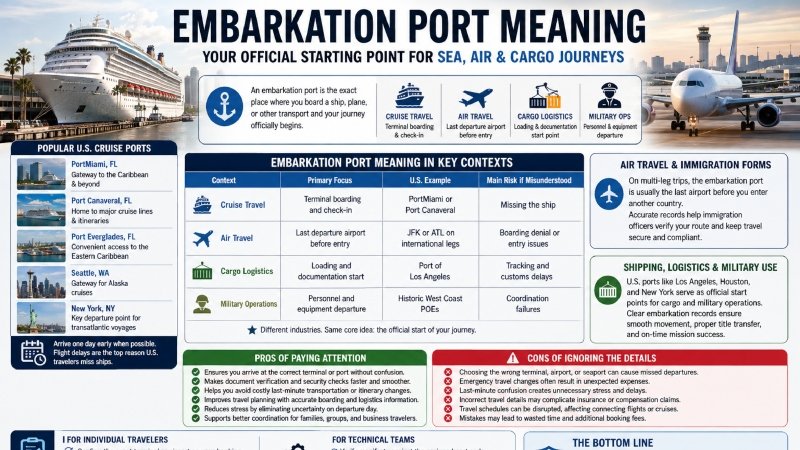
Understanding embarkation port meaning helps every U.S. traveler avoid costly mistakes. An embarkation port is the exact place where you board a ship, plane, or other transport and your journey officially starts. Cruise lines, airlines, immigration officers, and shipping companies all use this term for precision. For Americans planning Caribbean cruises from Florida or international flights from major hubs, knowing the embarkation port meaning prevents missed departures and document problems.
This guide explains the term clearly for individual travelers and technical teams who handle logistics. You will find practical details, a comparison table, advantages and drawbacks, and answers to common questions. Everything focuses on real U.S. situations so you can apply the information right away.
What Embarkation Port Meaning Includes Across Travel Types
An embarkation port is the place where a traveler officially begins a journey by boarding a ship, aircraft, or other form of transportation. The exact meaning can vary by travel context, so understanding the term is especially important when completing airline, cruise, immigration, or travel documents. The core embarkation port meaning stays consistent. It marks the official boarding location recorded on tickets, manifests, and immigration forms. In cruise travel, it is the terminal where you first step onto the ship. In air travel, it is often the last U.S. or connecting airport before you enter another country. Cargo teams and military planners use the same idea when loading goods or personnel.
Large American ports such as PortMiami, Port Canaveral, and Port Everglades handle millions of passengers each year. These locations show why the embarkation port meaning matters more than a simple city name. Multiple terminals exist in the same metro area. Choosing the wrong one creates delays that ships and planes will not wait for.

How Cruise Travelers in the USA Encounter Embarkation Port Meaning
Most U.S. searches for this topic come from cruise guests. The embarkation port meaning here centers on the terminal assigned to your sailing. You arrive during a set window, clear security, present your passport, and receive your cruise card. Luggage goes to porters. Cabins open after the previous guests leave and the ship is cleaned.
Popular Florida ports dominate the market. PortMiami and Port Canaveral serve as primary gateways for Eastern and Western Caribbean itineraries. Seattle and Vancouver handle Alaska sailings. New York and Galveston also appear frequently on American itineraries. Knowing the exact terminal address forms the practical side of embarkation port meaning. Arrive one day early whenever possible. Flight delays remain the top reason U.S. travelers miss ships. Once the ship sails, catching up at the next port of call falls entirely on you.
Air Travel and Immigration Forms in the United States
Airline tickets and U.S. customs forms also reference embarkation port meaning. On multi-leg trips the recorded point is usually the last airport before the destination country. A flight from Atlanta through Amsterdam to Rome may list Amsterdam as the embarkation point for European entry checks.
Immigration officers use this data for security screening and entry verification. Accurate records help authorities track routes. Travelers who overlook the listed location risk questions at the border or denied boarding at the gate.
Shipping, Logistics, and Technical Team Applications
Technical teams in logistics and military operations rely on precise embarkation port meaning. Cargo moves from U.S. ports such as Los Angeles or Houston under clear documentation. Title and risk often transfer at the loading point. Military planners designate Ports of Embarkation for coordinated troop and equipment movement. Clear records keep operations on schedule and reduce errors across borders.
Comparison of Embarkation Port Meaning in Key Contexts
| Context | Primary Focus | U.S. Example | Main Risk if Misunderstood |
|---|---|---|---|
| Cruise travel | Terminal boarding and check-in | PortMiami or Port Canaveral | Missing the ship |
| Air travel | Last departure airport before entry | JFK or ATL on international legs | Boarding denial or entry issues |
| Cargo logistics | Loading and documentation start | Port of Los Angeles | Tracking and customs delays |
| Military operations | Personnel and equipment departure | Historic West Coast POEs | Coordination failures |
This table shows how embarkation port meaning shifts slightly by industry while keeping the same core idea of the official start point.
Pros of Paying Close Attention to Embarkation Port Meaning
- Ensures you arrive at the correct terminal or port without confusion.
- Makes document verification and security checks faster and smoother.
- Helps you avoid costly last-minute transportation or itinerary changes.
- Improves travel planning with accurate boarding and logistics information.
- Reduces stress by eliminating uncertainty on departure day.
- Supports better coordination for families, groups, and business travelers.
Cons of Ignoring Embarkation Port Meaning
- Choosing the wrong terminal, airport, or seaport can cause missed departures.
- Emergency travel changes often result in unexpected expenses.
- Last-minute confusion creates unnecessary stress and delays.
- Incorrect travel details may complicate insurance or compensation claims.
- Travel schedules can be disrupted, affecting connecting flights or cruises.
- Mistakes may lead to wasted time and additional booking fees.
Best Practices for Individual Users and Technical Teams
Individual travelers should confirm the exact terminal name on the booking confirmation. Download the cruise line or airline app and complete online check-in early. Pack a day bag with medications, documents, and a change of clothes. Allow extra time for traffic near busy Florida ports.
Technical teams should cross-check manifests against the assigned port code. Update internal systems whenever a terminal change occurs. Coordinate with port authorities on tight turnaround windows. Maintain clear communication between operations, customs, and transportation partners. These steps keep both personal trips and commercial movements reliable.
Frequently Asked Questions
What does embarkation port meaning cover on a cruise ticket?
It identifies the specific terminal where you board the ship and the carrier’s responsibility begins.
How does embarkation port meaning differ on connecting flights?
It often lists the last airport before the destination country rather than the first U.S. departure point.
What should I do if I miss my cruise embarkation?
Contact the cruise line’s port agent immediately. You will usually need to reach a later port at your own expense.
Why do U.S. immigration forms request this information?
Authorities track travel routes, verify entry rules, and support security screening.
How early should Americans arrive at a Florida cruise terminal?
Follow the assigned window on your documents. Many travelers aim for the start of that window and arrive in the city the day before.
Can technical teams change an assigned embarkation port?
Only with formal approval from the carrier or authority. Unauthorized changes disrupt tracking and compliance.
Conclusion
The embarkation port meaning is simple yet powerful. It marks the official start of every sea, air, or cargo journey and directly shapes timing, documents, and costs. American travelers who master this detail move through busy ports with less stress. Logistics teams who apply it correctly keep operations accurate and compliant.
Review your next booking confirmation today. Confirm the exact terminal or airport listed. Build in extra arrival time and keep documents ready. This single action protects your trip and supports safer, smoother travel for everyone involved.